.svg)
Nan Hua High School
Explore the history of Nan Hua High School.
Image Gallery
School History
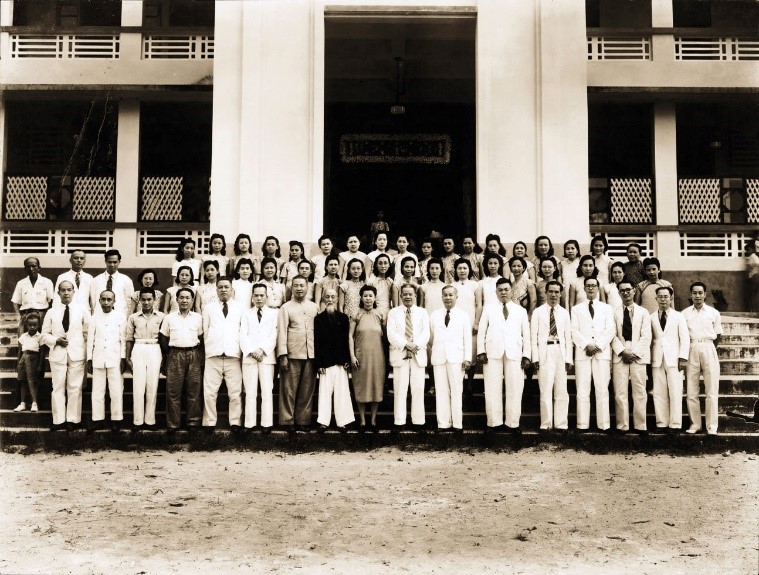
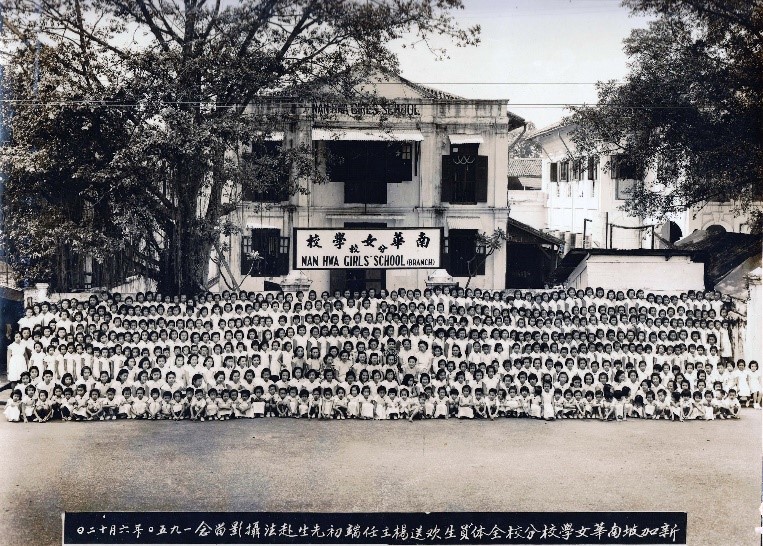
In 1917, Nan Hwa Girls’ School was set up as a Chinese-medium school on Coleman Street by the then principal of Tao Nan School, Mr Xiong Shangfu, with financial support from a group of Cantonese businessmen who wanted to promote girls’ education. In 1921, the school was relocated to Bencoolen Street. To cater to a growing enrolment, a new campus was built on Adis Road. In 1941, the school operated at two locations: the main school on Adis Road offered primary classes and teacher training classes, while the branch school on Bencoolen Street offered only primary classes. The school closed in 1942 during the Second World War and reopened in 1945.
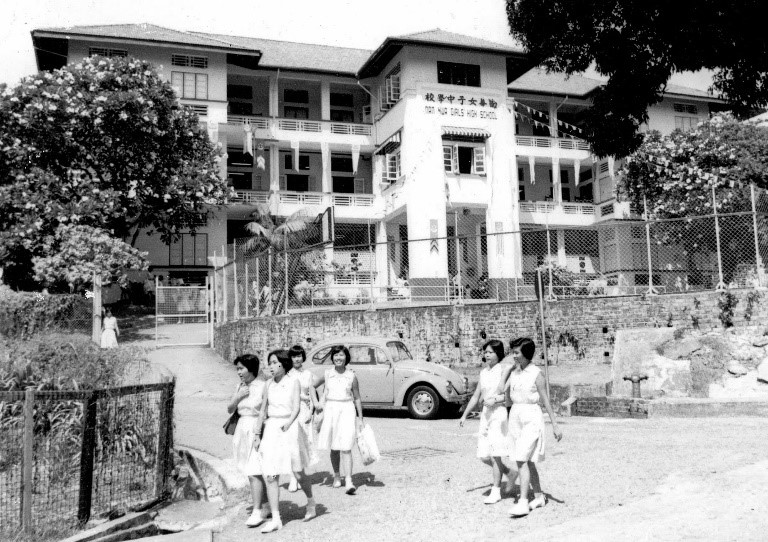
In 1957, the school was renamed Nan Hwa Girls’ High School with secondary classes. In 1964, the school ceased primary classes and functioned fully as a secondary school. It was recognised as one of the premier girls’ schools in Singapore. The school participated in many national events that displayed excellence in dance, uniformed groups, and sports. The school proudly celebrated its 50th anniversary in 1966.
In the 1970s, student enrolment declined due to urban redevelopment in the city. In 1982, the school relocated to 330 Clementi Avenue 1. In 1984, the school became a co-educational English-medium school and was renamed Nan Hua Secondary School. Two years later, it became a government school.
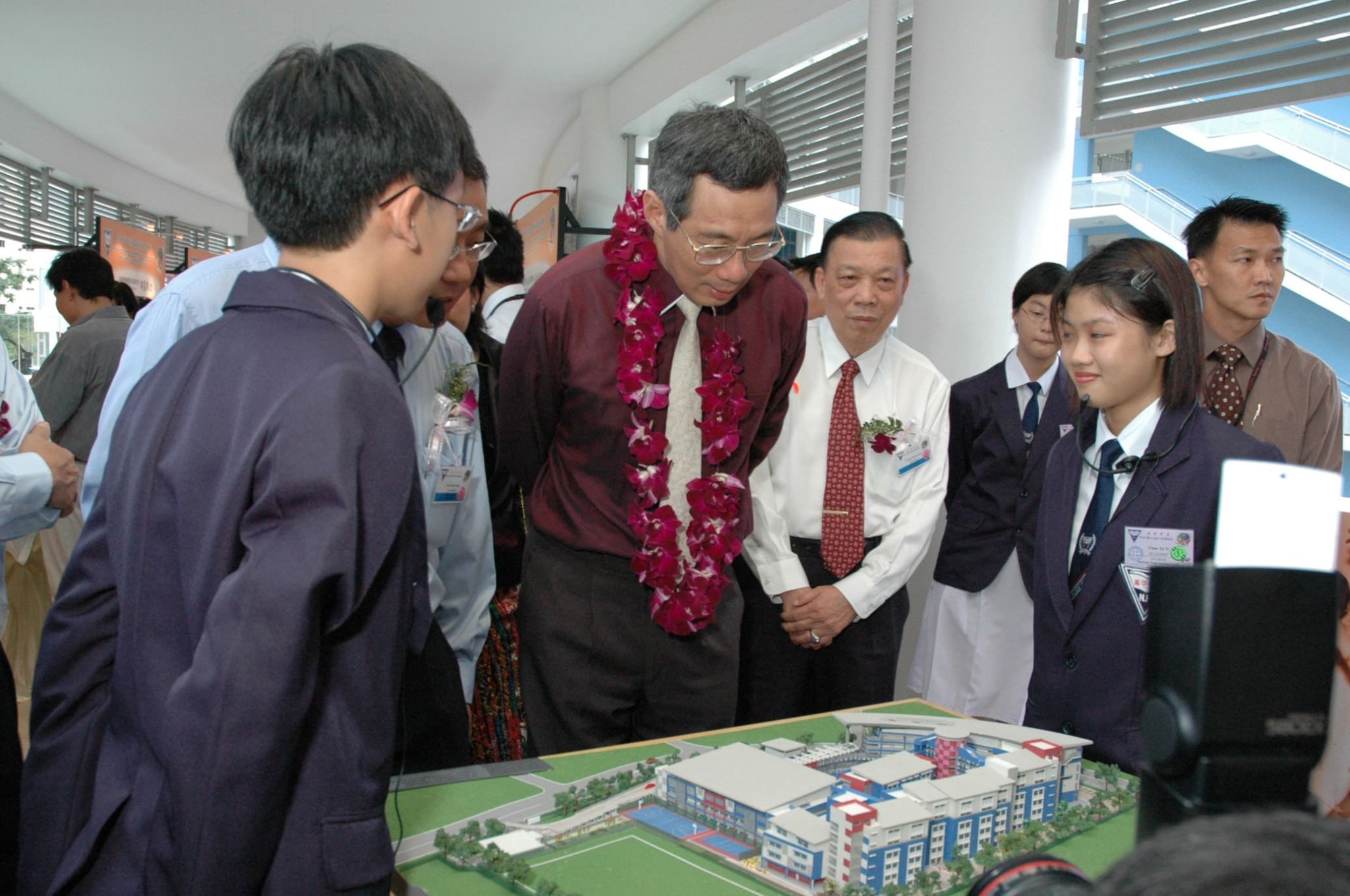
In 2000, Nan Hua became a Special Assistance Plan (SAP) school. It began operating from the current premises at 41 Clementi Avenue 1 from January 2004. In 2006, the school was renamed Nan Hua High School and was accorded autonomous status. In 2009, the school introduced its Bicultural Programme to groom students to be effectively bilingual and to embrace both the wisdom of the modern world and traditional Chinese philosophy. The school has continued to excel in the performing arts, environment education and the Bicultural Programme.
In 2017, Nan Hua High School celebrated its 100th anniversary. The school brought together many groups of people who have contributed to the school over the years. The theme ‘Centennial Excellence, Pioneering Tomorrow’ celebrated past traditions that have defined the 100-year-old school.
Principals:
- Mdm Wu Mulan (1917)
- Mdm He Yingting (1918)
- Mdm Wang Zuyun (1918–1920)
- Mdm Shi Lei (1921–1923)
- Mdm Cheng Xingjin (1924–1927)
- Mdm Yao Chuying (1928–1929)
- Mdm Wu Yunwen (1930)
- Mdm Li Cailing (1933–1935)
- Mdm Deng Zhicheng (1936)
- Mdm Lu Lanying (1937–1938)
- Mdm Yao Chuying (1939–1940)
- Mdm Feng Yimei (1941)
- Mdm Yang Shui Chor (1945–1971)
- Mdm Tsao Yu Hang (1972–1983)
- Mdm Yap Siew Keng (1984–1986)
- Ms Ching Ah Kim (1986–1988)
- Mrs Koh Sou Keow (1989–1991)
- Ms Ching Ah Kim (1986–1988)
- Mrs Leong Kum Hoong (1991–1994)
- Ms Winnie Tan Swee Ling (1994–1998)
- Mr Loh Leong Beng (1999–2003)
- Dr Foo Suan Fong (2003–2009)
- Mrs Tan Jong Lek (2010–2022)
- Mr Chiew Jing Wen (2023 - present)
Key Milestones
key milestones
1917 | Establishment of Nan Hwa Girls’ School. |
1957 | Renamed as Nan Hwa Girls’ High School. |
1966 | Celebration of 50th anniversary. |
1984 | Became co-educational and renamed as Nan Hua Secondary School. |
1986 | Becomes a government school. |
2000 | Accorded Special Assistance Programme status. |
2004 | Began operations from its current premises at Clementi Avenue 1. |
2006 | Renamed as Nan Hua High School and accorded autonomous status. |
2009 | Implementation of Bicultural Programme. |
2017 | Celebration of 100th anniversary. |
School Motto
忠: Loyalty
孝: Filial piety
仁: Humanity
爱: Love
礼: Courtesy
义: Righteousness
廉: Integrity
耻: Sense of shame
School Crest
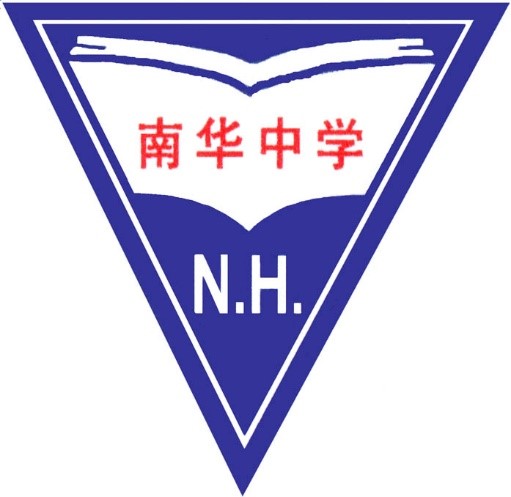
The colour white signifies the embodiment of everything that is pure and wholesome, particularly purity in thought, word and deed. Blue signifies the essential qualities of good character – sincerity and integrity. The three corners of the triangle represent the three aspects of school education – moral, intellectual and physical education. The widely opened book symbolises the importance of reading. Students must acquire the desire to read in the course of their development into educated adults.
School Song
Years it takes to build a nation
Strive we to this end with valour always
Nurtured we from childhood through our youth
Finest essence spread we all our days
Loving, loyal, filial, upright, courteous be,
Patient, tolerant and humble we shall be
Work together, each dutifully
Forward to the future eagerly
立国大计须百年树人
我校同仁以此自克励
小学教育通一中学教育
五育平均发展向砥砺
礼义廉耻 忠孝仁爱 好校训
客忍谥让 热诚负责 相勉励
分工合作奋向万里前程
他日学成为国家效力