.svg)
Pei Hwa Presbyterian Primary School
Explore the history of Pei Hwa Presbyterian Primary School.
Image Gallery
School History
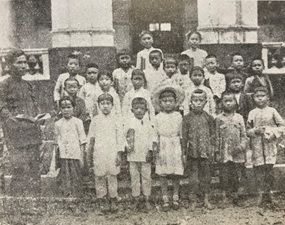
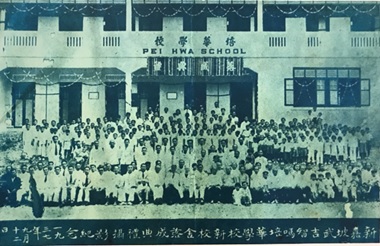
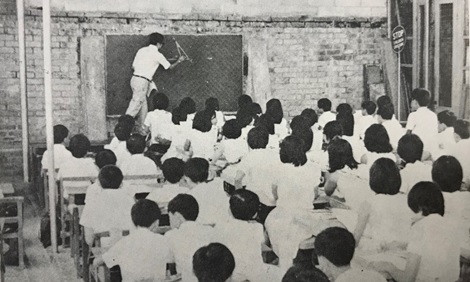
Pei Hwa Presbyterian Primary School (PHPPS) was founded by preacher Joseph Koh in 1889 with the purpose of providing free education to the children from the villages around Bukit Timah. It was originally known as Road End Free School and the medium of instruction then was in Teochew. In 1918, it became a Chinese-medium school. In 1922, it was renamed as Pei Hwa School. In 1941, with the outbreak of the Second World War, the school was closed temporarily from 1941 to 1945. Pei Hwa School reopened after the war in 1945 and the first School Management Board was formed.
In 1992, the new building was officially opened at Pei Wah Avenue and the school was accorded the Special Assistance Plan (SAP) status. In 1995, it was renamed Pei Hwa Presbyterian Primary School to reflect its affiliation to Glory Presbyterian Church. In 2000, the school celebrated its 111th anniversary.
During the PRIME upgrading, the school moved to a holding site in 2002. It returned to its upgraded site in 2004. An official opening ceremony was held the following year. In 2009, the school celebrated its 120th anniversary and started its flagship Chinese Arts Programme (CAP). The school commemorated its 125th anniversary in 2014.
2019 was a significant milestone for us as we celebrated our 130th Anniversary. It was joyous celebration by generations of staff and students alike, in living out and upholding the values of our founders while staying current. The school’s vision and mission were refreshed to reflect the current educational focus and efforts. The school endeavors to develop students of character with a zest to learn and a heart to serve (乐学乐善**,** 以德为先) and seeks to realise its mission to nurture bilingual students in a caring, bicultural environment, to serve God and nation.
**Zest for Learning
**In line with its desire to nurture a zest for learning, the school has deliberately attempt to go beyond grades, beyond the transactional approach of sitting and clearing examinations, to imbuing the love for learning. We develop effective communication skills of all students through the school’s Applied Learning Programme (ALP). The 6-year progressive programme teaches students thinking skills (such as divergent, convergent, organization and analysis skills) so that they are able to express themselves clearly in oral and written forms. The programme develops students to be Competent and Confident Communicators with coherence and clarity in thought and expression through activities such as story-telling, public speaking and drama appreciation. The school values and the 21CC are incorporated into every stage of the programme.
We nurture students to be passionate sportspersons and upright contributing leaders with strength of character. STAR@PHPPS which stands for “Self-defence, Track and Field, Adventuring and Racquet Games” is the school’s Learning for Life Programme (LLP). The A3 Instructional Approach ensures that students acquire broad-based sports knowledge, values and skills. They then apply their learning through authentic platforms such as group work, camps, CCA, VIA, Outdoor Education and learning journeys. Students experience affirmation of their application of knowledge, values and skills through reflection, celebration of learning and positive comments from teachers and parents.
**Appreciation for Chinese language and culture
**As a SAP school, the school also capitalizes on its distinctiveness in its promotion and inculcation of the Chinese values, culture and tradition. The school has designed the Chinese Arts Programme (CAP) and Bi-Cultural Enrichment Programme to deepen students’ appreciation of Chinese Language, culture and values. Students are offered a spread of culturally rich arts programmes, activities and learning experiences such as Chinese folk art and songs to Chinese musical instruments like Kuai Ban. Every level has an anchor programme to further reinforce and extend what students have learnt in the curriculum. CAP is also integrated into Modular CCAs such as Chinese Dance and Chinese Drum. Another highlight would be the cultural camp which is specially organised for the students to deepen their knowledge and appreciation of the Chinese Culture as bilingual students in a bicultural environment.
Principals:
- 许约瑟 Preacher Joseph Koh (1889–1903)
- 董黼卿 Reverend Tang Poh Keng (1922–1941)
- 陈英贵 Mr Tan Eng Quee (1945–1949)
- 叶谷虚 Pastor Yap Kok Hu (1950–1959)
- 吴适 Mr Wu Serk (1960–1987)
- 林莉萍 Mrs Dinah Gan Eng Foh (1988–1993)
- 李丽萍 Mrs Maria Phua Li Leng (1994–1997)
- 陈丽萍 Miss Chan Lai Peng (1998–2005)
- 罗淑芳 Mrs Foo Sook Fong (2006–2016)
- 陈桂华 Mrs Elsie Poey (2017–2022)
- 荘爱珠 Mrs Allison Lim (2023 - present)
Key Milestones
key milestones
1889 | Founding of school as Road End Free School. |
1918 | Became Chinese-medium school. |
1922 | Renaming of school as Pei Hwa School. |
1941 | Closure of school due to Second World War. |
1945 | Reopening of school after Second World War. |
1992 | Official opening of new school building; accorded the Special Assistance Plan status. |
1995 | Renaming of school as Pei Hwa Presbyterian Primary School. |
2002 | School moved to holding site for PRIME upgrading. |
2009 | Celebrated 120th Anniversary; started the flagship Chinese Arts Programme. |
2014 | Celebrated 125th Anniversary. |
2019 | Celebrated 130th Anniversary. |
School Motto
Loyalty and Honesty 忠诚
School Crest
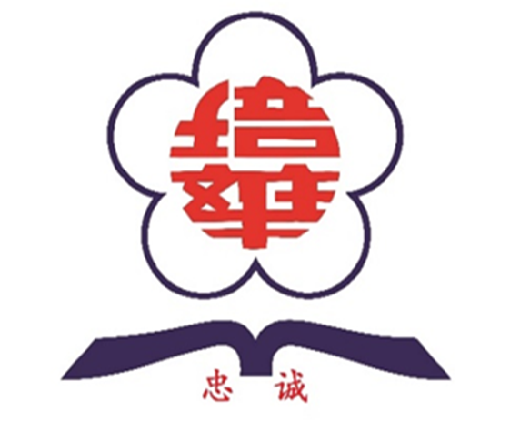
The school uses light blue for the background on the crest. This is to represent the sky above the peaceful surrounding of the school. To symbolise steadfastness and patriotism for the country, the school name is written in red.
According to ancient Chinese text, the character ‘花’ was both synonymous and homonymous to ‘華’, and the use of the two characters was interchangeable. A white plum blossom was thus selected to represent the school to emphasise its Chinese character. The blossom, known to bloom even in the harshest of winter, also represents resilience and perseverance. These are values that the school hopes to inculcate in its students.
Originally, two leaves supported the white blossom to provide a sense of balance, and this balance also refers to the balanced education that the school provides for the students. Over the years, these leaves were changed to an open book to represent a child’s different God-given talents, and the school’s goal to nurture these talents and to bring out the best in each child. It also symbolises the Bible, from which many important values are drawn which the school wants to teach its students.
The heart of the white blossom was later replaced with two Chinese characters ‘培華’, which represents the need to nurture and develop. ‘華’ means ‘Chinese’. Together, it encapsulates the need to nurture in its students an appreciation of Chinese tradition and culture as well as a love for the language. The character ‘華’ was further modified to underline the importance of mathematics. Thus mathematical symbols were incorporated into the character. These symbols also signify the school’s aspiration to develop students in logical and critical thinking, and problem-solving. For an artistic flair, the horizontal stroke within the character was removed.
An additional meaning of ‘培華’ is a reference to the school’s main objective of developing students’ talents, ‘栽培才華’.
In summary, the crest embodies the school’s aspiration for students to develop resilience and perseverance so that they are ready for the future challenges.
School Song
我培华 历史悠长
园舍美 学风优良
德智体群 四育并进
培养灵性 锻炼身心
为儿童造幸福
为国家立基础
来歌颂 我培华
美丽的 可爱的培华
它是个快乐的家园
我们的快乐的家园
我培华 历史悠长
闪耀着 真理之光
信望与爱 日日更新
成长道路 圣灵指引
为我校向前进
为荣耀主圣名
来歌颂 我培华
美丽的 可爱的培华
它是个快乐的家园
我们的快乐的家园