.svg)
St Patrick's School
Explore the history St Patrick's School.
Image Gallery
School History
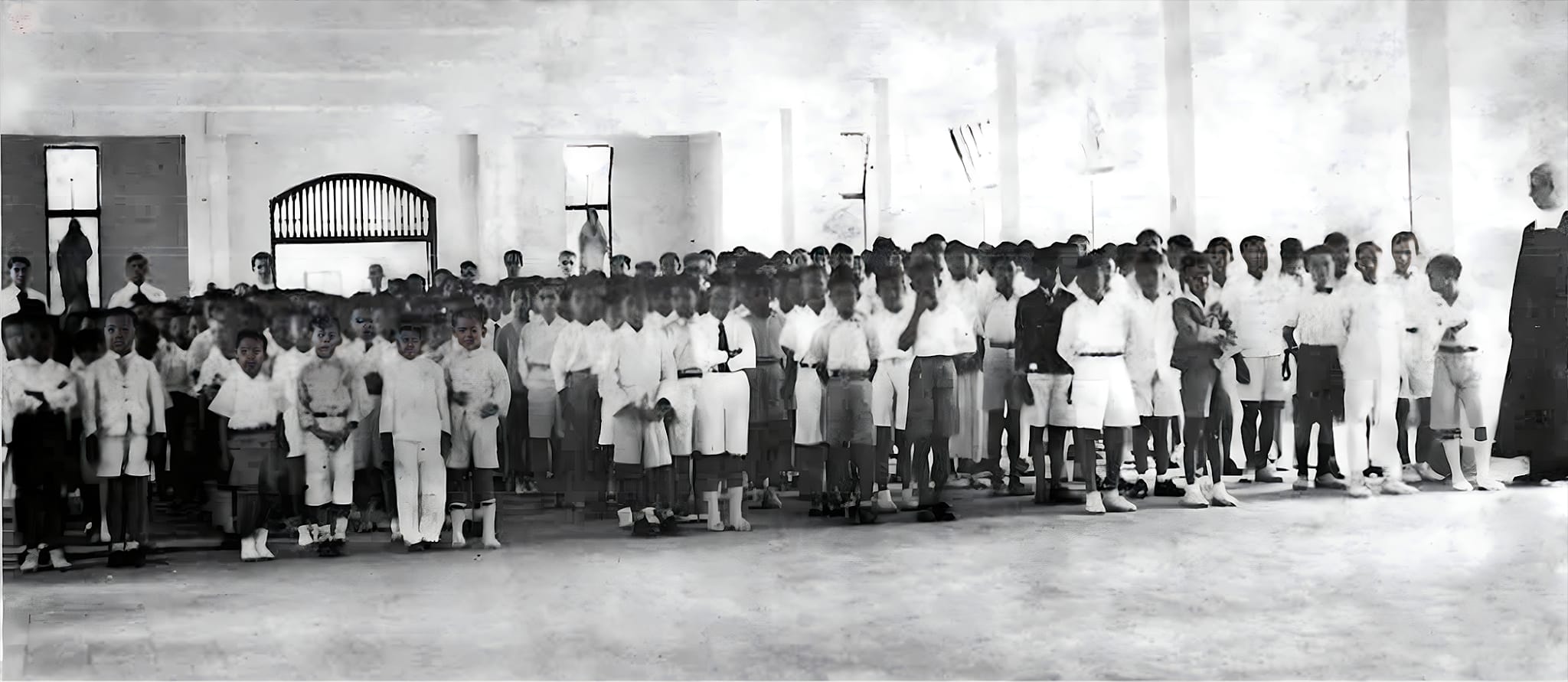
The school was founded in 1933 as a temporary branch school of Saint Joseph's Institution, another Catholic boys' school in Singapore. It was built on land acquired by the La Salle Brothers in 1898 which was originally intended for building a resort bungalow. Brother Stephen Buckley saw the population growth in eastern Singapore and petitioned the La Salle Brothers to build a school on that piece of land. The main school building was completed in 1932 and Saint Patrick's became a school in its own right in 1933.
During World War II, the school was used by the British as a hospital and later by the Japanese as an administrative building. It was returned to the La Salle Brothers in 1946.
In 1957, the primary section of the school was separated and became Saint Stephen's School, a primary school for boys.
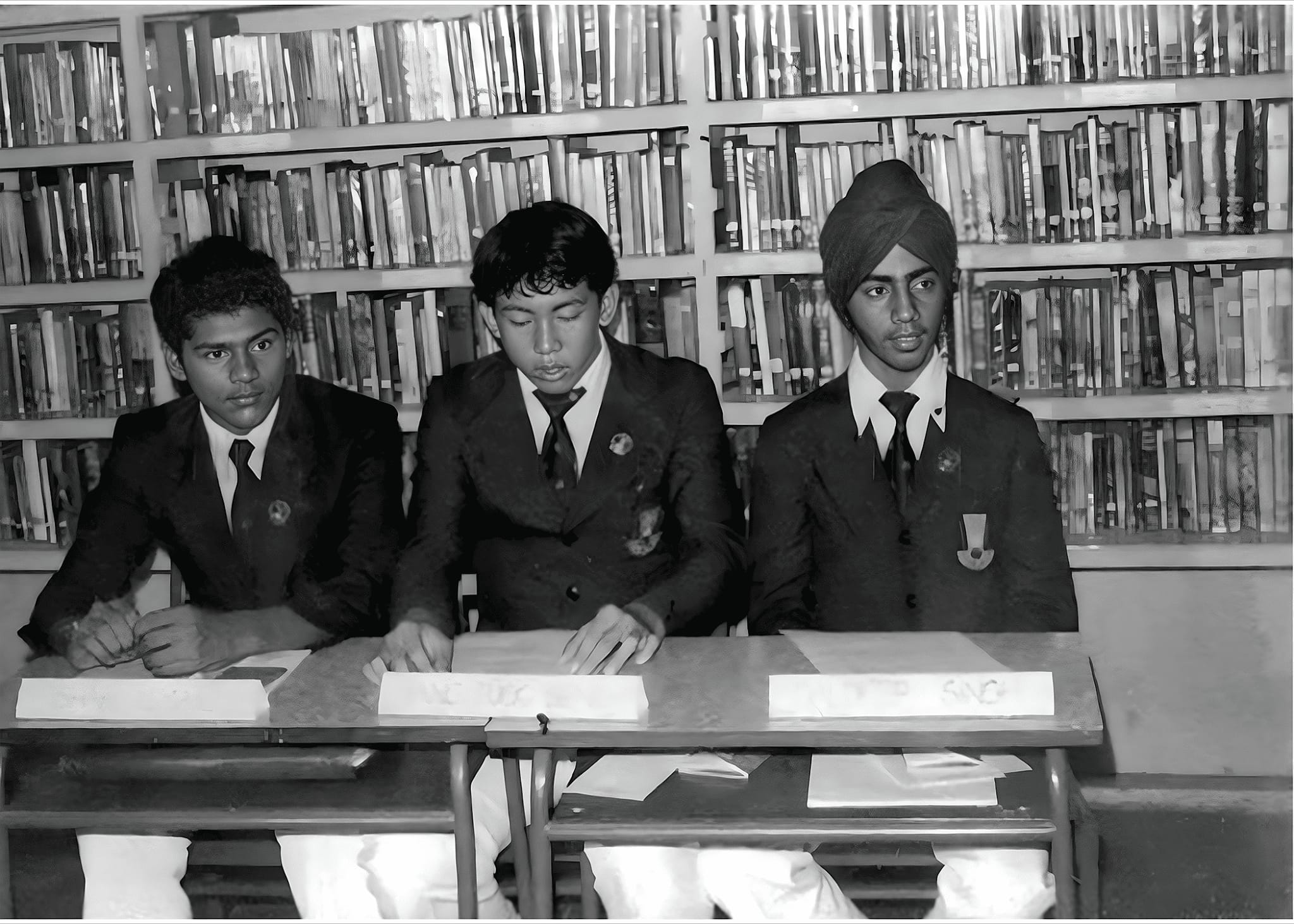
In 1969, Saint Patrick's became a co-educational school with the introduction of pre-university classes. However, with the phasing out of such classes in 1978, the school returned to being an all-boys school.
Today, Saint Patrick’s School remains proud institution with more than 85 years of history and heritage. Even as we remain rooted in our traditions, values and beliefs, we are committed to constantly evolving in order to best meet the needs of our students.
Principals:
- Bro Loarn Lynam (1933)
- Bro Stephen Buckley (1934–1935)
- Bro Henry Jaussaud (1936–1940)
- Bro Matthias Linehan (1941)
- Bro Patrick Donovan (1941–1945)
- Bro Canice Brennan (1945–1946)
- Bro Alban Rozario (1947–1952)
- Bro Lawrence Robless (1953–1957)
- Bro Justinian De Souza (1957–1962)
- Bro Lawrence Robless (1963–1964)
- Bro Patrick Loh (1964–1966)
- Bro Joseph Kiely (1967–1972)
- Bro Dennis Watt (1973–1974)
- Br Joseph McNally (1975–1982)
- Bro Oliver Rogers (1983–1984)
- Mr Joseph Ng (1986–1988)
- Bro Joseph Guan (1989–1991)
- Mr Goh Bian Koon (1991–1997)
- Mr Michael De Silva (1997–2001)
- Mr Lak Pati Singh Lucas (2002–2011)
- Mr Adolphus Tan Chin Eng (2012–2017)
- Mr Eric Lee Wei Tat (2018–2019)
- Mr Mark Gerard Minjoot (2019–2025)
- Mr Ting Poh Leong Aloysius (2026-present)
Key Milestones
key milestones
1933 | Founding of school with 245 students. |
1942 | Converted into a hospital by the 13th Australian General Hospital , and subsequently becomes the nos. 3 Japan’s Air Force headquarters. |
1957 | Transfer of primary section to St Stephen’s School. |
1963 | Start of pre-university co-educational classes. |
1975 | Celebration of 30th anniversary of the postwar reopening of the school. |
1978 | Inauguration of the Patrician Society (Alumni). |
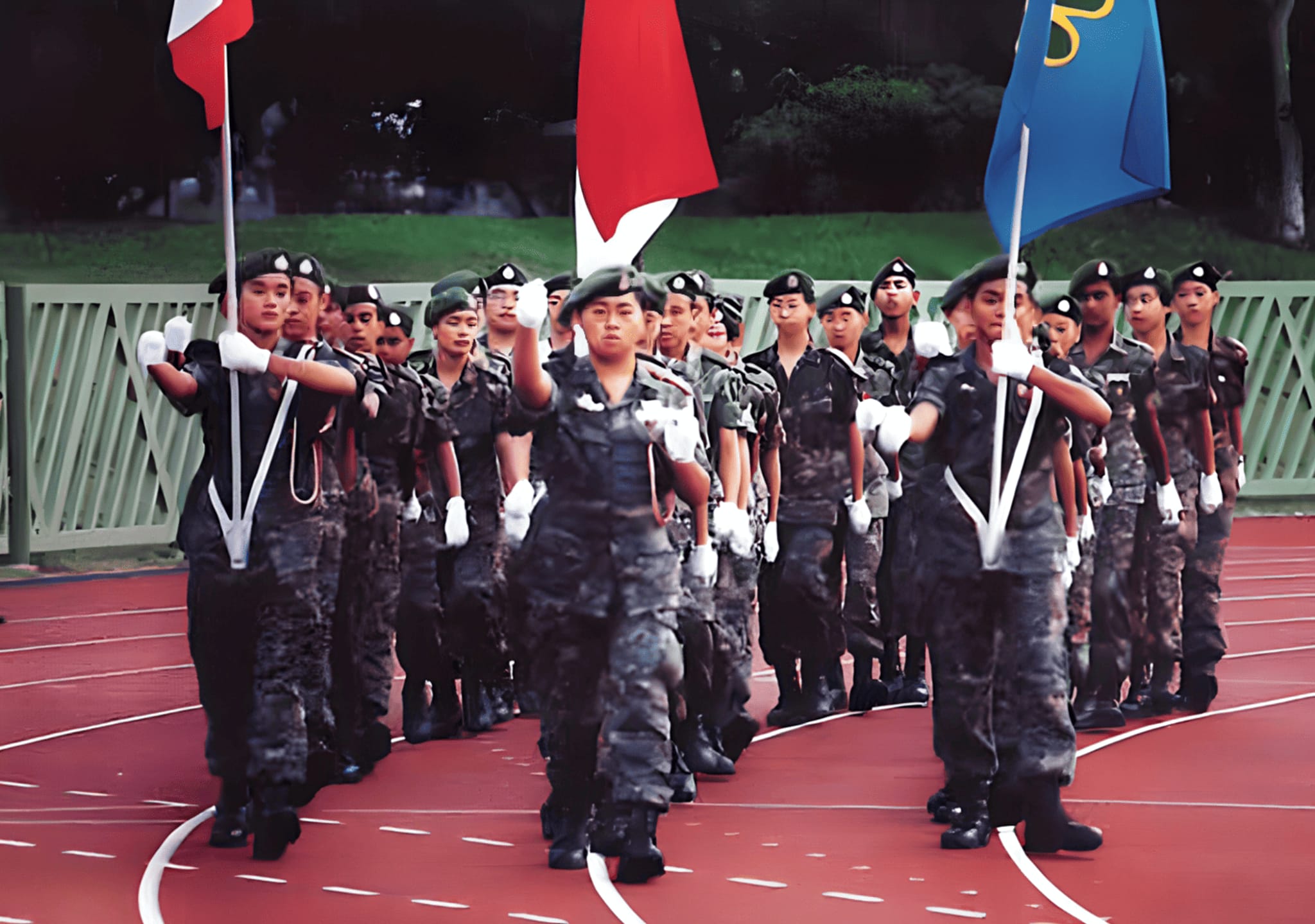
1982 | The first school band from Asia to participate at the St. Patrick’s Day parade in New York. |
2012 | Over 6000 scouts attended the ‘Adiji (Welcome) Chief Scout’ ceremony to welcome our President Dr Tony Tan as the new Chief Scout. |
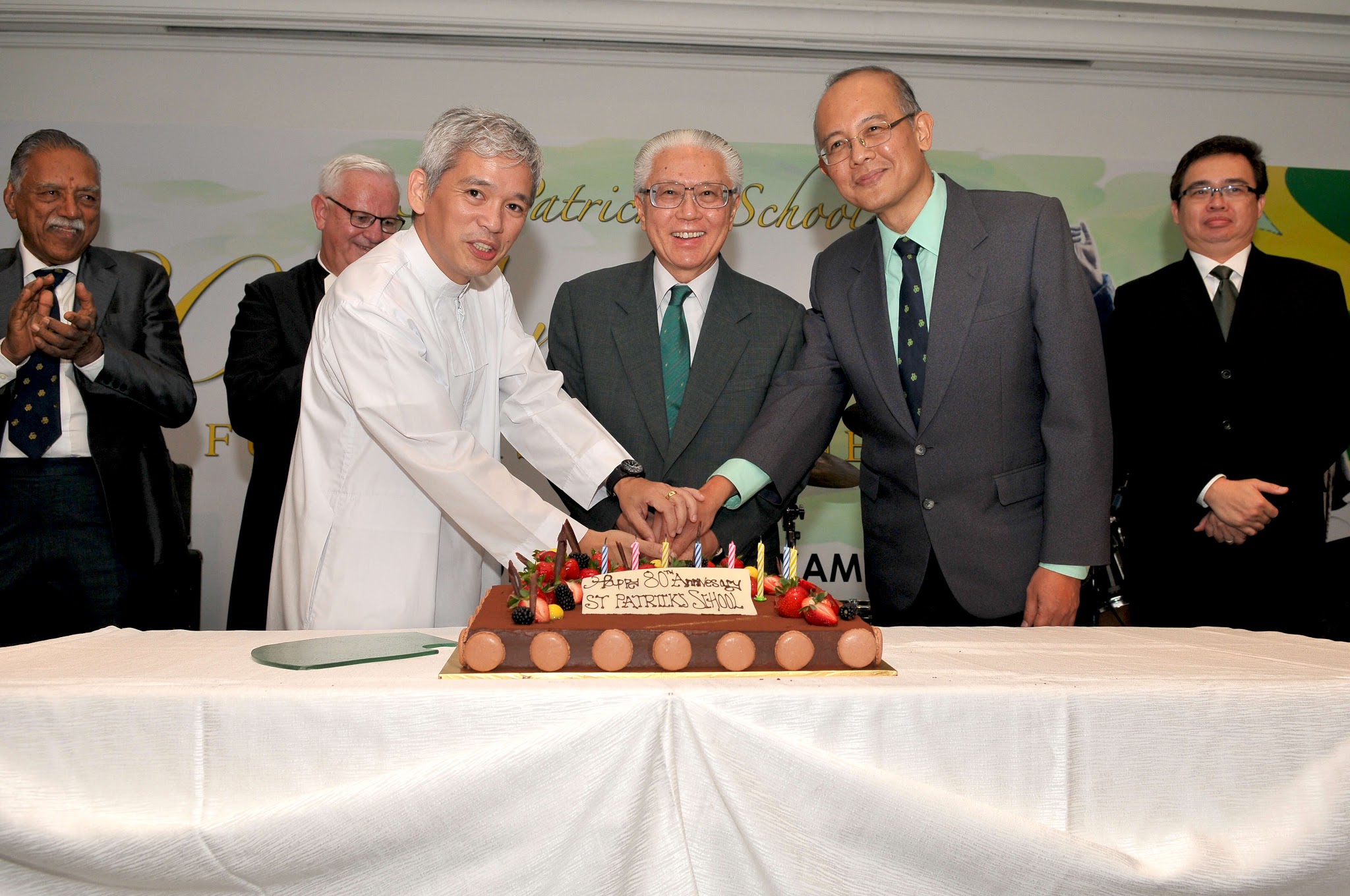
2023 | Celebration of 90th anniversary. |
School Motto
Potest Qui Vult
(Latin for ‘He Who Wills, Can’)
The motto is a reminder that, despite human limitations, one can still achieve his ideals if he tries. The Patrician has his feet firmly on the ground as he reaches for the unreachable star.
School Crest
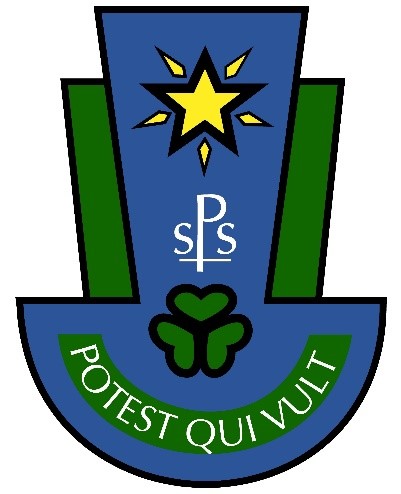
Three symbols are depicted in the school badge. The green shamrock is a powerful sign of unity in diversity. It was used by St Patrick as a humble image of God. It also represents the earth and the environment. Set against a blue background is the Christian Brothers’ symbol – the radiant star – which conveys the ideals that can be achieved by each student.
School Song
All through our college, a voice is resounding,
Promptly respond to your duty's sweet call;
Hearken you all for the trumpet is sounding
Your mater's proclaiming her watch words to all.
Chorus: Forward her children dear
Ever with hearts sincere,
Render with joy to your mater her due!
All that is vile reject,
Heaven will E’er Protect
Son of St Patrick’s valiant and true!
Onward and upwards in life's earnest battle,
Joyously bearing the brunt of the fight
Nobly forgiving for aught that may pain you
And bravely defending the cause of the right.