.svg)
The Japanese Occupation
Learn how the Japanese Occupation (1942–1945) transformed education in Singapore, from compulsory Japanese language classes to schools growing food amid wartime shortages.
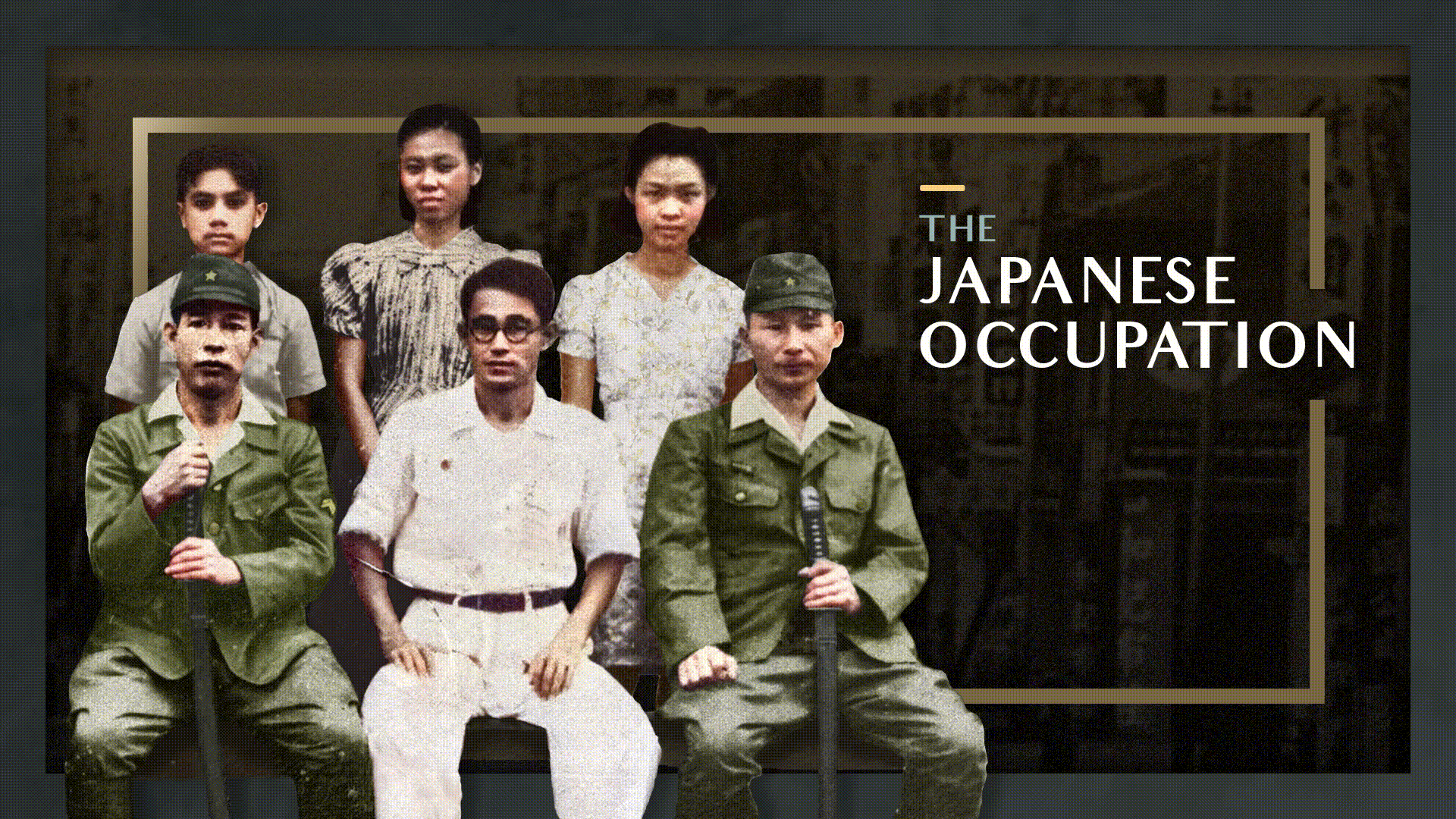
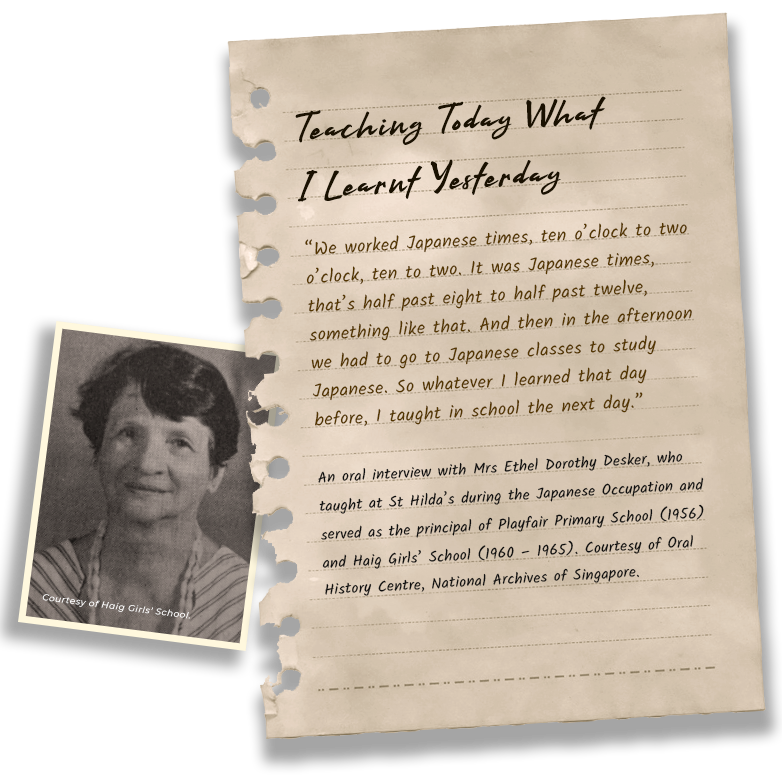
Education came to a near-complete standstill, during the years of the Japanese Occupation from 1942 to 1945. The war interrupted schooling for most, as schools were destroyed or seized for military use. The Japanese Military Administration required all students to speak Japanese, and to take instruction in the Japanese language. They had hoped that people would acquire the Japanese spirit and an undying loyalty to the Emperor.
Life Leading to the Japanese Occupation
Prior to the Japanese invasion of Singapore, there were already concerns of impending war. In preparation for the growing military threat, schools and students prepared themselves for the war to come.
In schools, students were taught how to recognise bombs and how to administer first aid. Schools were later used as air raid shelters and hospitals.
Learning Japanese
To enforce the learning of the Japanese language, dedicated language schools like Syonan Nippon Gakuen were set up in 1942, taking in students of different ages and occupations. Students had to undergo a three-month course of study during which they learned the Japanese language and were taught the Japanese spirit and way of life.
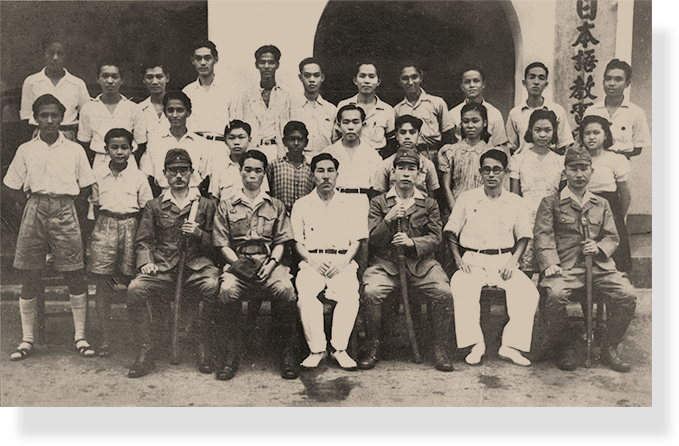
A Japanese language class during the Japanese Occupation (c. 1942).
Soh Chuan Lam Collection, courtesy of National Archives of Singapore.
The teaching of Japanese in schools was also made compulsory in 1942. Teachers had to undergo Japanese language instruction and were banned from using the English language in schools. Teachers who struggled to learn the language or who were unwilling to learn were dismissed.
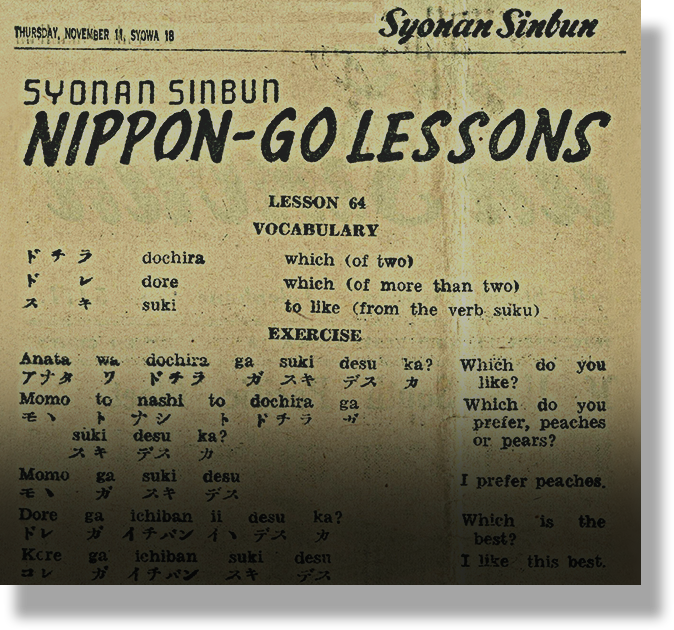
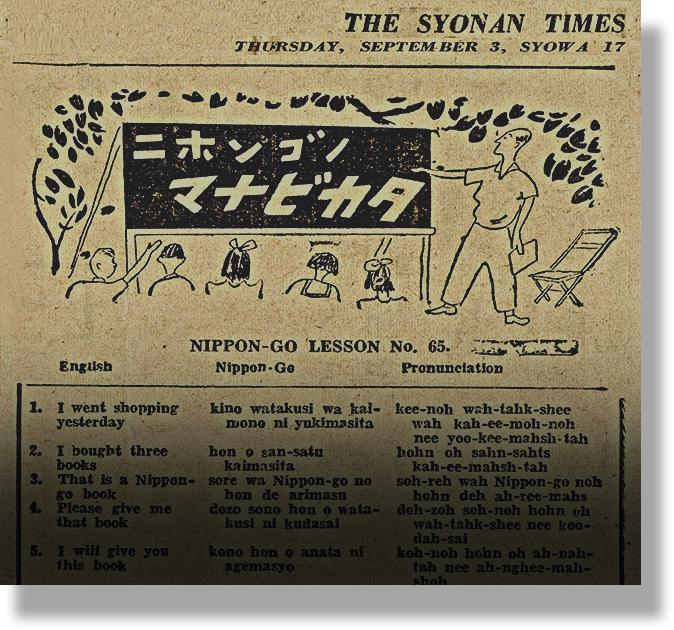
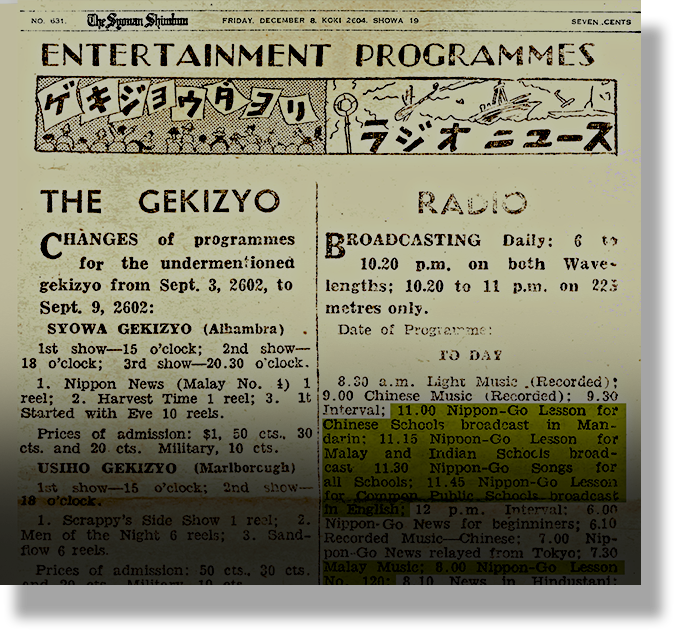
Newspapers featuring lessons on conversational Japanese.
School Life during the Japanese Occupation
Every morning, students and teachers had to assemble, face the direction of the Imperial Palace, and bow deeply. The Japanese flag would be raised as they sang Kimigayo, the Japanese national anthem.
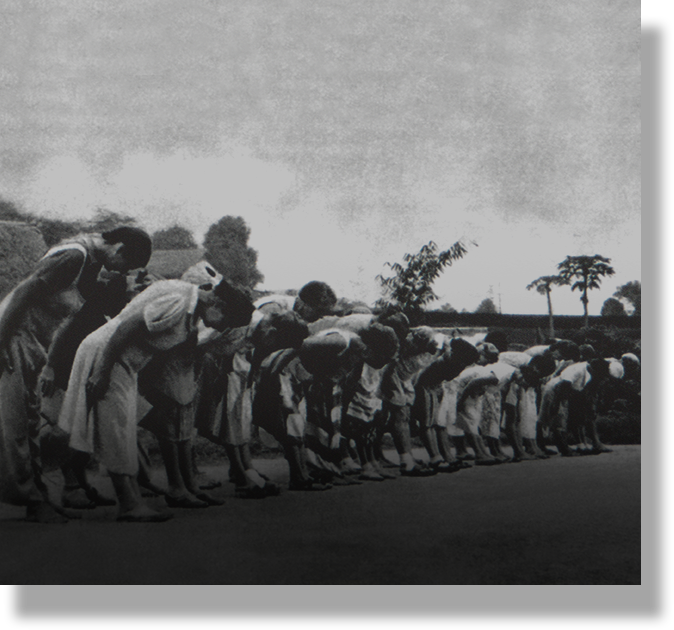
People bowing to the Japanese troops (1945).
Argus newspaper collection of war photographs, State Library of Victoria.
As the war went on, Singapore experienced food shortages. Many schools had to grow their own food, and gardening became part of the curriculum. Students were encouraged to grow an assortment of local vegetables. Tapioca, which grew well without special care, became a staple food for the people.
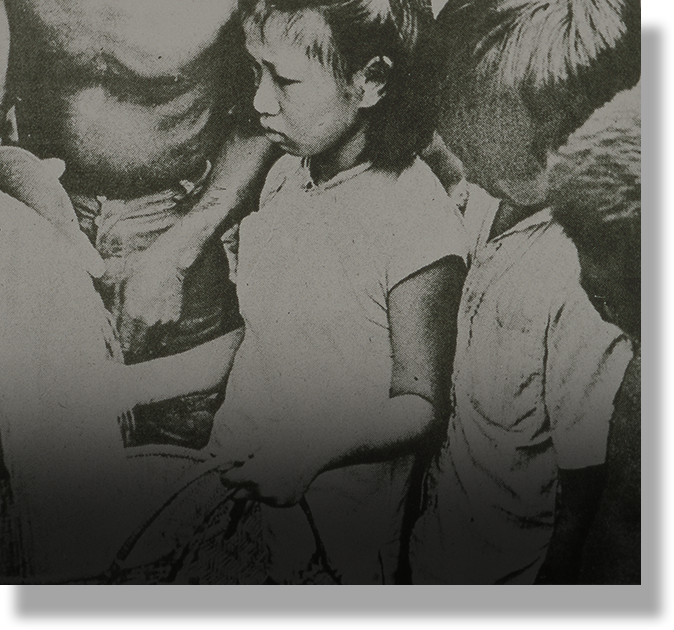
Rice rationing during the Japanese Occupation (1942 – 1945).
Courtesy of the National Museum of Singapore, National Heritage Board.
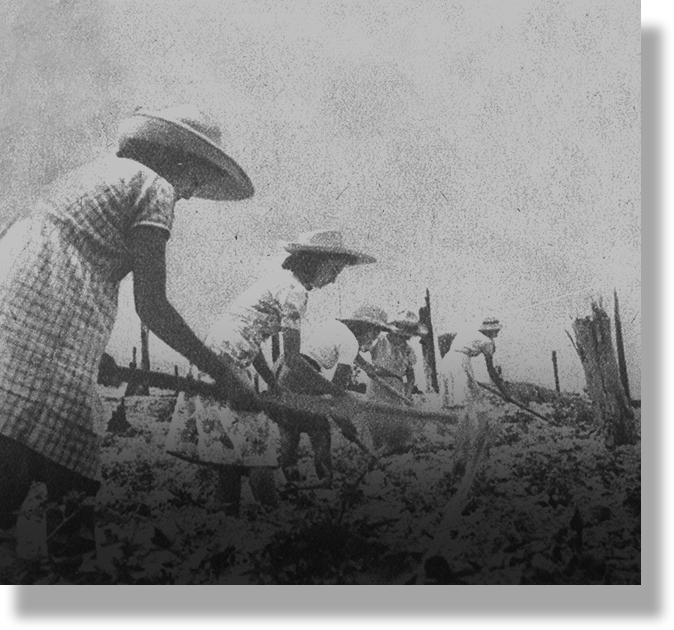
Farming during the Japanese Occupation (1942 – 1945).
F A C Oehlers Collection, courtesy of National Archives of Singapore.
Educational Materials
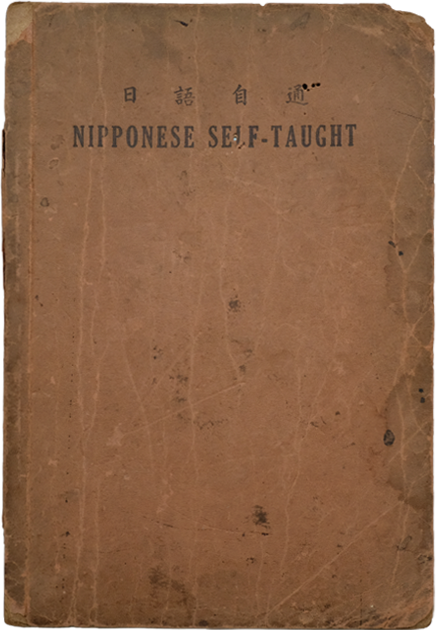
Nipponese Self Taught
Explore this Japanese textbook used in Malayan schools to teach locals basic conversational Japanese.
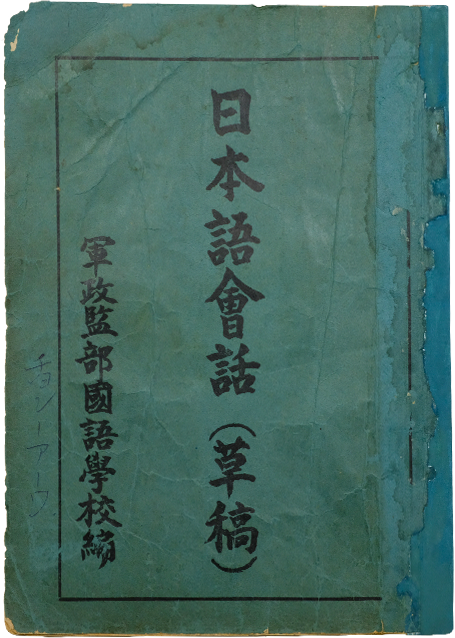
Japanese Conversation Textbook
Learn conversational Japanese for both formal and informal settings with this textbook.
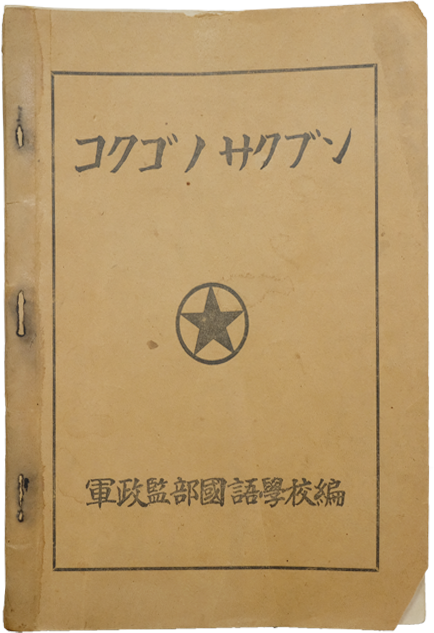
Japanese Language Textbook with Malay Translation
Use this textbook to learn Japanese with the help of Malay translations.
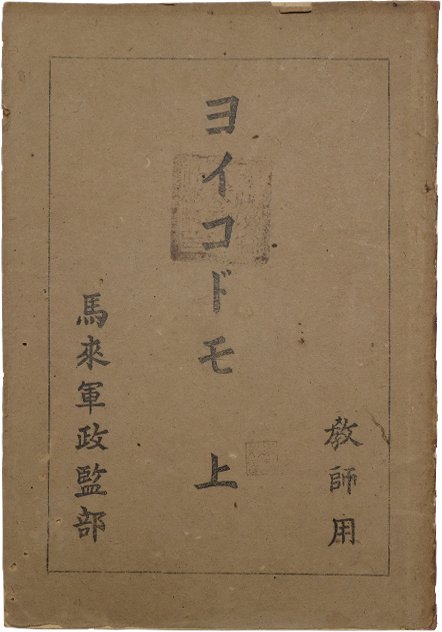
Japanese Textbook for Teachers
A Japanese textbook for teachers, featuring illustrated captions in both Japanese and Malay.